The last chance for bills to be heard in the opposite chamber.
How a new Milliman analysis questions assumed savings from Medicaid enrollment cuts.
AHCCCS finalizing the CYE 2027 DAP proposal.
Are we close to the finish line?
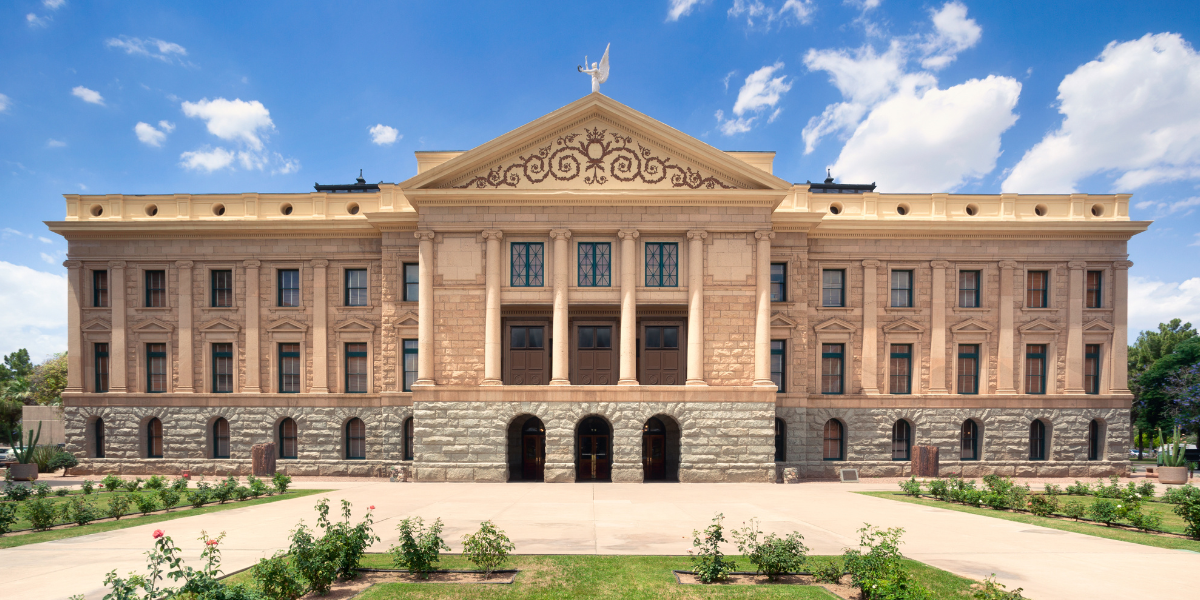
This week, the Arizona Legislature worked overtime, reviewing a record number of bills in committee as lawmakers push toward tomorrow’s deadline to hear bills in the opposite chamber.
Session stats (as of this week):
Days of session: 74
Bills posted: 1,966
Bills passed: 20
Bills vetoed: 15
Bills signed: 5
Aside from the longer duration, the other numbers are similar to last week. That’s not surprising.
Late Friday, Governor Hobbs paused budget negotiations until Republicans publicly release their budget proposal. That decision has increased tension between the Legislature and the Governor’s Office, as also reported by the Tucson Sentinel.
We observed a similar situation last year when the Governor held bills at her desk until funding for the Developmentally Disabled Program was settled. AzHHA will keep a close watch on budget negotiations.
What happened this week: The House Health and Human Services Committee met Monday from 9 a.m. until late into the evening, working through a 30-bill agenda. AzHHA staff were present throughout to advocate for key priorities. The radiation protection system package was discussed, with mixed results that ultimately support AzHHA’s stance against unfunded mandates.
AzHHA achieved a major victory with SB1628 (claims denial; prior authorization, reporting), which passed unanimously out of committee. View AzHHA’s testimony here.
This bill promotes transparency and accountability by requiring Arizona-specific reporting on claims and prior authorization denials.
Thank you to Senator Angius for her continued leadership on this issue.
AzHHA opposed. The only amendment removed freestanding children’s hospitals from the mandate. We have repeatedly offered alternative paths that were not adopted. This issue may come up again.
SB1121 (radiation protection systems; medical procedures) – Passed (as amended)
A late amendment removed the mandate and shifted the policy to an optional framework tied to participation. This creates a path for the Arizona Department of Health Services rulemaking and for clearer standards around emerging radiation-reduction technologies.
Additional priorities continue to advance:
SB1253 (safe haven providers; hospital deliveries) and SB1162 (health care institutions; licensing; compliance) passed House Rules.
Both have cleared caucus and are awaiting Calendar of the Whole and final read votes.
What’s next: Appropriations is the final step for many bills, with committees getting an extra week to consider legislation.
Expect long agendas: It’s common for bills that failed or were not heard in policy committees to be reassigned to Appropriations for another attempt to survive.
The bottom line: We’re close, but not there yet. With budget negotiations stalled and key deadlines approaching this week, the next phase will decide what actually crosses the finish line.
New Milliman analysis questions assumed savings from Medicaid enrollment cuts
A new March 2026 Milliman white paper cautions that Medicaid enrollment reductions may not produce the straightforward state savings policymakers expect.
In a managed care environment, states do not necessarily save the full capitation amount each time a beneficiary disenrolls from coverage.
If the beneficiaries most likely to disenroll are relatively healthy or low-cost, the average cost of the remaining managed care population rises, which can place upward pressure on capitation rates.
Milliman also notes that H.R. 1’s community engagement requirements and more frequent redeterminations are expected to reduce Medicaid enrollment further and likely increase the uninsured population, making the downstream fiscal effects more complicated than they may first appear.
A key takeaway is that these apparent Medicaid savings may be offset elsewhere in the system.
Milliman flags the potential for higher uninsured rates, increased uncompensated care pressure, possible increases in DSH payments, and lower state revenue from provider taxes and managed care premium taxes as enrollment and utilization decline.
The paper also notes that H.R. 1 restricts new healthcare-related taxes and gradually lowers the allowable rate on existing Medicaid provider taxes in expansion states from 6% to 3.5% of net patient revenue by FY 2032.
For hospitals — especially safety-net, rural and high-Medicaid providers — that combination could mean more uncompensated care, more coverage churn and added pressure on Medicaid financing.
Milliman concludes that “the fiscal impact of any enrollment shifts will be affected by the interplay between state and federal financing, managed care tax rates, health plan and state administrative expenses and the efficiency of the managed care program.”
AHCCCS finalizes CYE 2027 DAP proposal; April 1 deadline
On Tuesday, March 24, 2026, the Arizona Health Care Cost Containment System (AHCCCS) posted its final Contract Year Ending (CYE) 2027 Differential Adjusted Payment (DAP) proposal.
No hospital-related changes were made from the preliminary notice.
Why it matters: For CYE 2027, AHCCCS will phase out the Health Information Exchange (HIE) DAP for most hospitals and tie DAP increases to participation in select quality programs, affecting all AHCCCS payments.
DAP increases by hospital type:
General acute care, critical access and behavioral health hospitals: Eligible for a 2% increase on all AHCCCS payments by participating in either the Maternal Syphilis Program or the Medications for Opioid Use Disorder (MOUD) Program.
Rehabilitation hospitals and long-term acute care hospitals: Pressure Ulcer Performance Measures reinstated; no action required.
Indian Health Service and 638 tribally owned or operated facilities: May qualify for up to a 3% increase on all AHCCCS payments through participation in select programs, including HIE, the Social Determinants of Health Closed Loop Referral System, the Maternal Syphilis Program and the MOUD Enhancement Program.
What’s next: Letters of intent (LOI) submission.
Hospitals participating in the maternal syphilis or MOUD programs must submit a letter of intent by Wednesday, April 1, 2026.
On Monday, March 23, 2026, the Maricopa Department of Public Health (MCDPH) presented its 2026 heat response action plan, outlining continued, community-wide efforts to reduce heat-related illness and deaths across the region.
Why it matters: The 2026 action plan builds on a second consecutive year of decline in heat-related deaths in Maricopa County.
By the numbers: Preliminary data for 2025 show 427 deaths, down from 608 in 2024 and 645 in 2023.
The big picture: Building on this momentum, the county will continue its comprehensive response strategy in 2026, focusing on expanding access to heat relief resources, strengthening partnerships and increasing public awareness of heat risks and prevention.
Go deeper: Additional information about heat safety and available resources can be found here.
ADHS rulemaking notice: Creating state registrations for EMS for the DEA’s Controlled Substance Program
New Drug Enforcement Administration (DEA) regulations now require emergency medical services providers to register with the DEA to enable them access to controlled substances, just like physicians, dentists, hospitals and other providers, and get a DEA number.
The big picture: The Arizona Department of Health Services (ADHS) has begun a rulemaking to establish a method to enable emergency medical service providers, including ambulance services, to register under the Protecting Patient Access to Emergency Medications Act of 2017.
Without ADHS authorization, emergency medical service providers would not be allowed by the DEA to register, get a DEA number or gain legal access to controlled substances to treat patients under their care.
Go deeper: ADHS has posted a draft rule on this topic.
What’s next: Input about the draft rule is requested through an online survey that will close on Sunday, March 29, 2026.
UPCOMING EVENTS
Friday, April 10, 2026 – Arizona HFMA Spring Conference The Arizona Chapter of the Healthcare Financial Management Association (HFMA) will host its Spring Conference at Scottsdale Stadium, bringing together healthcare finance leaders from across the state for a day of learning, insights and connection. This year’s program will focus on how analytics, artificial intelligence and leadership strategies are shaping reimbursement and financial decision-making. Sessions will include an AHCCCS update, AzHHA legislative insights, emerging trends in healthcare AI and the impacts of H.R. 1. Learn more and register here.
Friday, May 1, 2026 - From Crisis to Care: Improving Outcomes in Arizona’s Behavioral Health System The Arizona Public Health Association’s 98th Annual Conference will focus on strengthening Arizona’s behavioral health system and improving outcomes for people with mental and behavioral health needs. This year’s conference will highlight innovative strategies, evidence-based practices and policy approaches that move the system beyond crisis response and toward sustainable, person-centered care. Learn more and register.
June 9-10, 2026 - 2026 AzCHER Healthcare Emergency Preparedness Conference This year’s theme is “Many voices, one mission: Advancing healthcare preparedness together.” This year’s one-and-a-half-day conference features sessions shaped by member feedback and brings together experts across healthcare, public health and emergency management. Register now.
Save the Date: 2026 Arizona Hospital Leadership Conference Mark your calendar for the AzHHA Foundation’s 2026 Arizona Hospital Leadership Conference, taking place Oct. 21–23 at the El Conquistador Tucson, a Hilton Resort. This annual gathering brings together hospital and healthcare leaders from across the state for engaging discussions, networking and forward‑focused learning. Additional details, registration information and sponsorship opportunities will be shared in the coming months. Questions may be directed to communications@azhha.org.