The Arizona Legislature poised to change hands for the first time in 60 years.
A court ruling that blocks a CMS medical frailty policy.
Healthcare as a defining issue in the midterm elections.
Legislature poised to change hands for the first time in 60 years
Why it matters: Arizona looks set to have its first unified Democratic government since 1966, with Democrats holding the Governor’s Office and both chambers of the Legislature.
That would change who sets the agenda on the state budget, the Arizona Health Care Cost Containment System and health policy when session opens Jan. 11, 2027.
The big picture: A blue wave carried Democrats up and down Arizona’s ballot.
Results are unofficial and counting continues, but the top statewide races have been called.
Called by the Associated Press:
Governor: Governor Katie Hobbs (D) won a second term over U.S. Representative Andy Biggs (R). Her running mate, former Mesa Mayor John Giles, becomes Arizona’s first lieutenant governor.
Props. 141, 144 and 320 are still too close to call.
What’s next: If the leads hold, expect new leadership in both chambers and new committee chairs, including the health and human services and appropriations committees that shape hospital policy.
The bottom line: Nothing is final yet. We’ll be back next week with updated results and an analysis of what the new landscape means for Arizona hospitals.
AzHHA joined a coalition of 25 states challenging the rule, including CMS’ addition of language tying medical frailty to an individual’s ability to comply with community engagement requirements.
The bottom line: The court found that Congress established a minimum definition of who must be considered medically frail and that CMS did not have authority to narrow or alter that statutory definition.
However, the court upheld CMS’ 12-month lookback period for claims and encounter data used in medical frailty determinations, finding the agency had reasonably explained that provision.
The court did not separately consider the states’ challenge to limits on self-attestation.
The court issued a permanent injunction preventing enforcement of the challenged provision and provided states a six-month stay of enforcement related to determining who qualifies as medically frail under H.R. 1.
Healthcare takes center stage
Why it matters: Healthcare is emerging as one of the defining issues of the midterm elections, reflecting growing public concern about affordability, access and the cost of care.
The big picture: Voters are weighing whether frustration with rising healthcare costs will translate into policy changes at the federal and state levels.
From insurance premiums to prescription drug prices, many Americans continue to feel financial pressure despite ongoing reform efforts.
What we're watching: Election outcomes could shape future debates around Medicare, Medicaid, marketplace coverage and broader affordability initiatives.
Policymakers on both sides of the aisle are facing increased pressure to address costs while maintaining access to care.
The bottom line: The conversation around healthcare is no longer just about coverage.
It's increasingly about affordability, accountability and how leaders respond to one of the issues that affects nearly every American.
Apply now: Healthcare Leadership Academy
Applications are currently being accepted for the 2027 cohort of the Healthcare Leadership Academy (HLA).
The AzHHA Foundation partners with Creighton University’s College of Professional and Continuing Education to provide healthcare leadership and management education to rising leaders within AzHHA member hospitals.
What you need to know: Nine months of learning begins in March 2027 and culminates in November 2027 which includes three in-person sessions and four hours of synchronous virtual attendance required on the second Thursday of April, May, June, July, September and October.
The HLA is geared toward mid-level managers and early-stage executives to prepare them for C-suite positions.
The big picture: This is fourth cohort of the HLA. Learn more about the program here.
What’s next: To apply, submit your resume, letter of support and statement of purpose in one PDF to MemberServices@azhha.org by 5 p.m. on Monday, Nov. 30, 2026.
If you have any questions, please contact Laura Dickscheid, vice president of member services and 2024 HLA participant, at MemberServices@azhha.org.
Community convenings held this fall
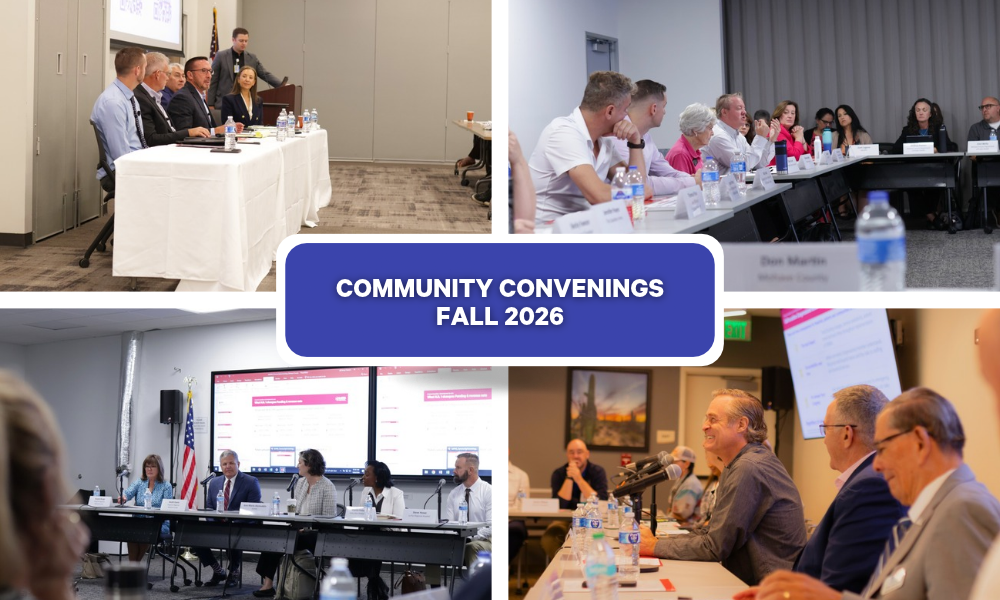
This fall, regional hospital, business and community leaders came together for a discussion on the issues shaping healthcare in their region.
Why it matters: Important topics were discussed including healthcare affordability, health plan accountability, care for underserved populations and the potential impacts of federal policy changes on local communities.
The big picture: These convenings in Cochise County, Mohave County and the White Mountain region demonstrated how bringing healthcare, business and civic leaders to the same table can strengthen relationships, elevate the hospital voice and turn local conversations into meaningful advocacy.
Go deeper: Our members have access to a healthcare and community convenings toolkit.
Thank you to the AzPHA for recognizing excellence in public health across Arizona, and congratulations to this year’s award winners!
Why equal staffing doesn’t always mean equal access
New from 3D Health, an AzHHA affiliated partner: A closer look at why physician FTEs may not tell the full story when it comes to patient access and workforce planning.
Why it matters: Healthcare organizations often measure physician capacity using full-time equivalents (FTEs), but two providers with the same FTE can deliver very different levels of patient access.
The challenge: FTEs measure available clinical time, not outcomes.
A physician’s ability to accept new patients, appointment wait times and patient panel size can very significantly, even among providers with identical FTEs.
There are also differences across specialties.
The bottom line: Recruitment remains important, but health systems may improve access more quickly by optimizing scheduling, opening patient panels and better utilizing existing provider capacity.
Looking beyond FTEs can help organizations make more informed workforce and access decisions.
In relationship with DataGen, AzHHA distributes reports to hospitals based on information submitted to the Centers for Medicare and Medicaid Services. DataGen generates hospital-specific reports which are sent to AzHHA hospital members as part of their membership.
Why it matters: This data helps hospitals understand the financial impact of proposed changes and annual updates.
The reports can also assist in preparing budgets or benchmarking results with other similar organizations.
Thursday, Nov. 12, 2026 – A Tribal Health System in Practice: Nursing Leadership and Rural Care in the Chickasaw Nation Tribal health systems are an important part of the rural healthcare landscape, yet their governance, access models and care delivery structures may be unfamiliar to many healthcare leaders. During this Rural Health Month webinar, leaders from the Chickasaw Nation Department of Health will provide an inside look at one Tribally operated health system and the nursing teams who serve its patients and communities. Register today.
Tuesday, Nov. 17, 2026 – AZ Maternal and Child Health Workforce and Policy Summit – Building the Workforce. Shaping Policy. Supporting Families. Join leaders across Arizona’s maternal and child health ecosystem for a day of learning, connection and action focused on strengthening care from pregnancy through early childhood. This year’s Summit will focus on workforce, policies, partnerships and care pathways needed to better support families from pregnancy through postpartum, infancy and early childhood. Register now.
Jan. 8-9, 2027 – 3rd National Pediatric Disaster Conference The conference, which will be held in Scottsdale, Ariz., will focus on pediatric mass casualty incidents and innovative approaches to strengthening preparedness, response and recovery efforts for children. AzCHER encourages members to attend and take advantage of this opportunity to learn, connect and strengthen pediatric readiness. Learn more and register.